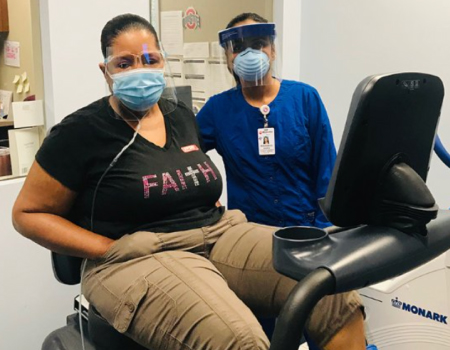
Heart disease is the leading cause of death among people in the United States, but many people with heart health conditions go on to live long, healthy lives. If you’ve been diagnosed with a heart condition or have undergone heart surgery, cardiac rehabilitation may help.
Through cardiac rehabilitation, also known as cardiac rehab, patients take steps to protect their hearts from future cardiac events. Cardiac rehab programs include educational elements, support services and supervised exercise designed to improve cardiovascular health and fitness.
Methodist Le Bonheur Healthcare offers cardiac rehab services at multiple convenient locations across the Mid-South. If your cardiologist recommends cardiac rehab for you, ask for a referral to the most convenient location.
Take a Heart Health Risk Assessment to learn if you should see a Methodist Le Bonheur cardiologist.
Methodist Le Bonheur offers comprehensive cardiovascular services across the Mid-South. Our team of expert providers offers a full spectrum of care, including diagnosis, treatment and management of heart health issues.
Cardiac rehabilitation is offered on both an inpatient and outpatient basis. Many patients begin the initial phases of cardiac rehab while still in the hospital following a surgical procedure, such as a heart bypass. Once patients are discharged from the hospital, cardiac rehab continues on an outpatient basis.
You benefit from seamless care and support by receiving all your cardiovascular care through one multidisciplinary team.
Your primary care provider or a cardiologist may recommend you participate in cardiac rehabilitation for many different reasons, including:
You may also need to participate in cardiac rehabilitation if you have chronic heart disease. Heart disease encompasses many different heart problems, such as:
Less commonly, cardiac rehabilitation may be recommended if you have major risk factors for heart problems — even if you haven’t been diagnosed with heart disease.
Cardiac rehab is a medically supervised program designed to help patients improve their future heart health. The program consists of three main components:
If you worked out regularly before being diagnosed with a heart health issue, do you really need cardiac rehab? The short answer is yes. Exercising with a heart disease or after heart surgery requires a careful, personalized approach. Our exercise physiologists can help you learn how to begin your exercise program again and adapt it if needed, ensuring your safety and progress.
Participating in cardiac rehabilitation offers many benefits. The American College of Cardiology defines five major benefits:
These benefits work together to improve patients' health and quality of life after surgery or a heart disease diagnosis.
Perhaps the most significant benefit of including cardiac rehabilitation as part of a comprehensive treatment plan, however, is decreased risk of death. Research has found that participating in cardiac rehabilitation reduces the risk of dying within five years after a heart bypass procedure or a heart attack by approximately 35%.
The benefit may be even more significant than that. A 2024 study found that patients with coronary artery disease who participated in at least five cardiac rehab sessions had a 42.7% reduced risk of hospital readmission or death.
Cardiac rehabilitation is typically covered under most insurance plans, including Medicare, after heart surgery and when managing many heart conditions. In most cases, cardiac rehab programs include three sessions a week for 12 weeks. It’s a small amount of time with a potentially significant impact on heart health.